Residential
Home inspections in Dallas and across the Metroplex
A licensed Texas inspector walks the house, reads it with a thermal camera, and hands you a report the same day with the photographs in it. Three to four hours on site, and no part of it is subcontracted.
Chapter 01
What the report actually covers
The inspection is a thorough visual examination of the systems and components of the house, and the report follows that same order: the heating system, the central air conditioning where the outside temperature allows it to be run safely, interior plumbing, the electrical system, the roof, the attic, visible insulation, walls, ceilings, floors, windows, doors, the foundation, the basement where there is one, and the visible structure.
The purpose of all of it is to identify the building components that are not performing as they should, and separately the systems that are working but need maintenance to keep working. Those are two different findings and a report that blurs them is not much use to a buyer trying to decide what to ask for.
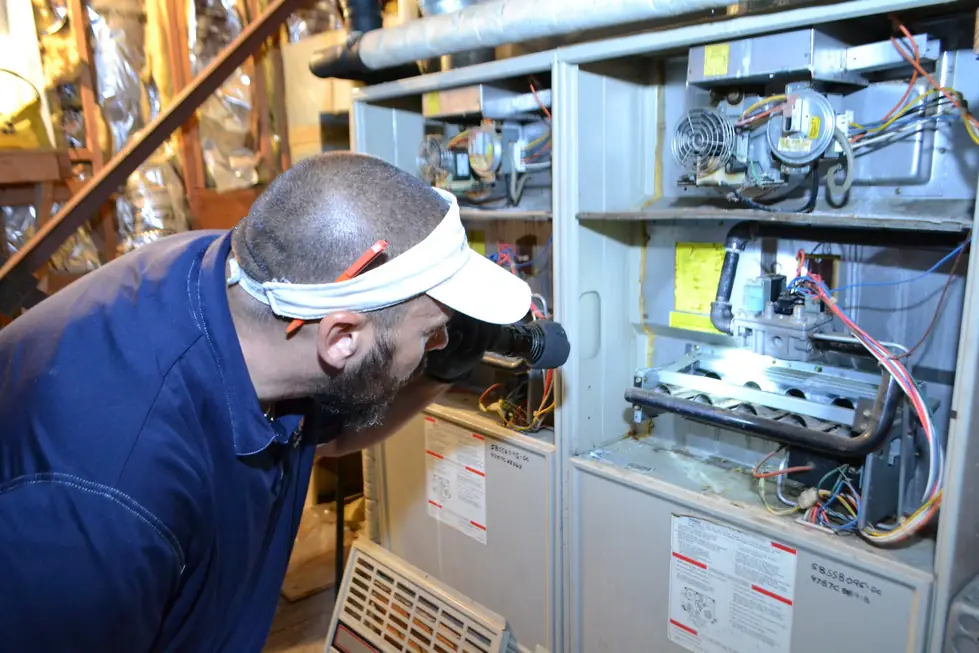
Trevor Battieste reading a residential heating unit with a handheld thermal imaging camera
Three to four hours on site, and the report lands the same day
A typical home inspection takes three to four hours. That is not padding, it is what it takes to run the systems through their normal controls, get into the attic, and get eyes on the parts of the house nobody looks at until they leak.
The report is computer generated and comes back to you the same day, with high resolution photographs and the infrared images included. On a transaction with an option period measured in days, a report that arrives next week is a report that arrives too late to negotiate with.
Chapter 03
What a Texas inspection can and cannot tell you
In Texas a home inspection has to be performed by an individual trained, certified and licensed by the state. What that inspector is describing is the condition of the systems and components at the time of the inspection.
It is not a prediction. An inspection does not tell you the future condition, the efficiency, or the remaining life expectancy of a roof or a compressor, and any inspector who offers you a number for those is guessing in a way that sounds authoritative. What you get instead is an accurate account of what is not performing now, which is the thing you can actually act on.
New construction, resale and foreclosure each read differently
On new construction the house is clean and everything is shiny, and the findings are usually about what a trade left unfinished behind a wall or above a ceiling once the drywall went up. That is exactly the situation infrared is built for, because it reads temperature difference through a surface rather than needing the surface opened.
On a resale the systems have a history and the question is where they are in it. On a foreclosure the question is often what has been sitting switched off, unheated or uncooled, and for how long. Same scope, same report, different things to be suspicious about.
Trevor Battieste, Texas Professional Inspector License #21796. BBB accredited since 2018.